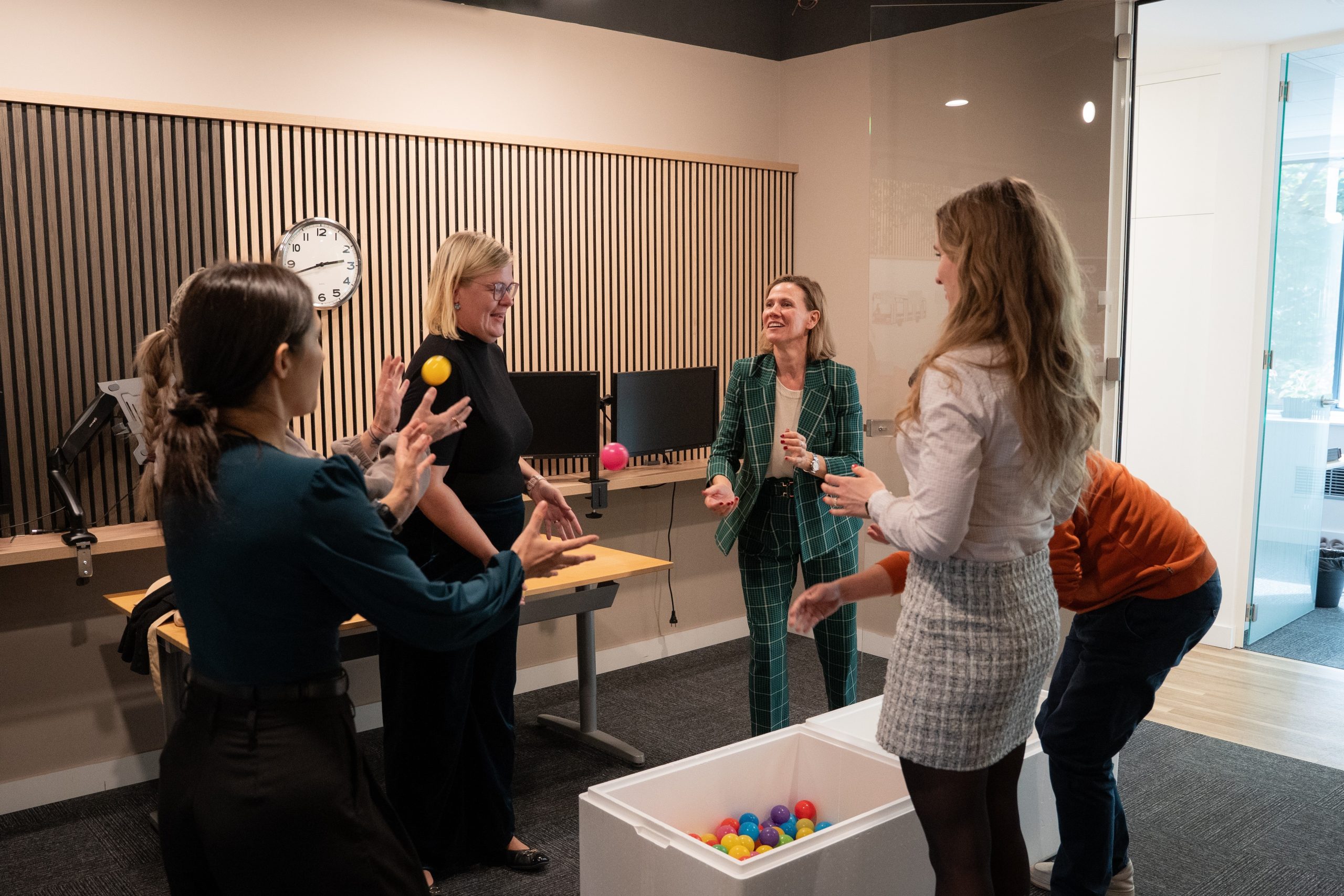
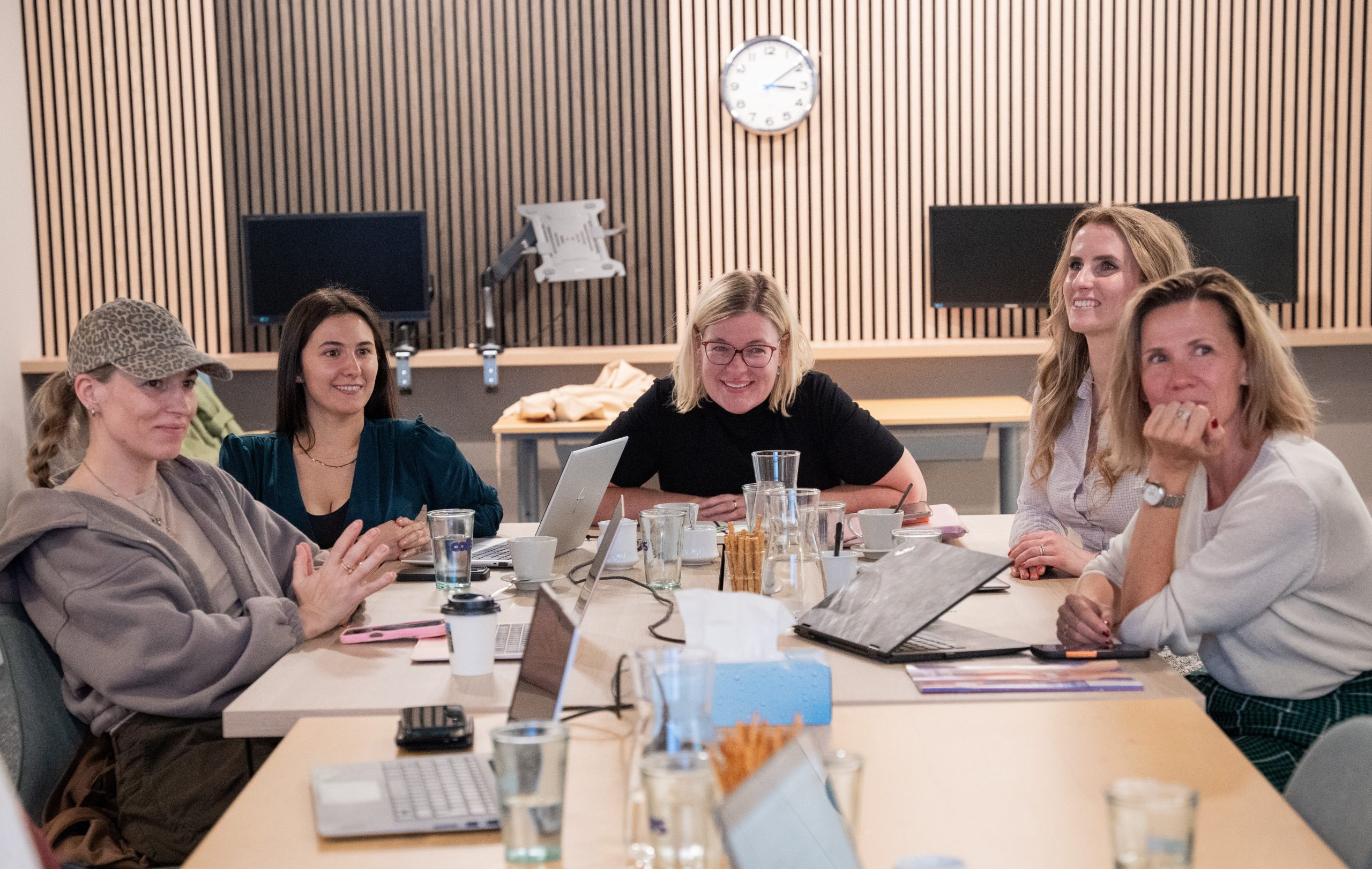
On Tuesday, October 13th, a group of founders stood in a circle in our office, during working hours, throwing a small ball at each other. Ondřej Dvořák and Lukáš Majerik ran the session for the Women in Tech group, one gentleman included this time, and the ninety minutes were meant to be about something quite dry, which is how a growing company keeps everyone working on the same priorities.
The game comes first because it makes the problem visible faster than a slide can.
The game
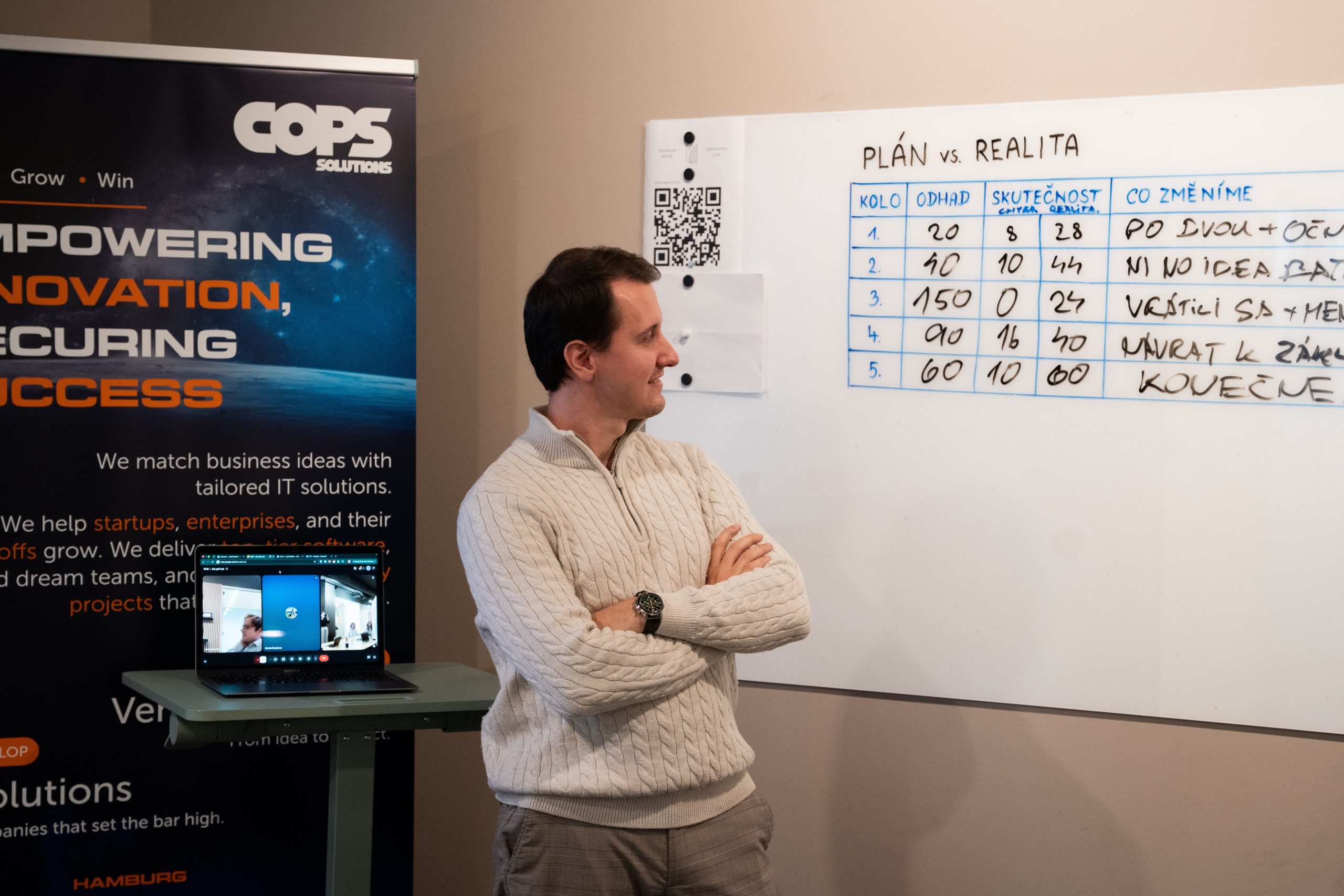
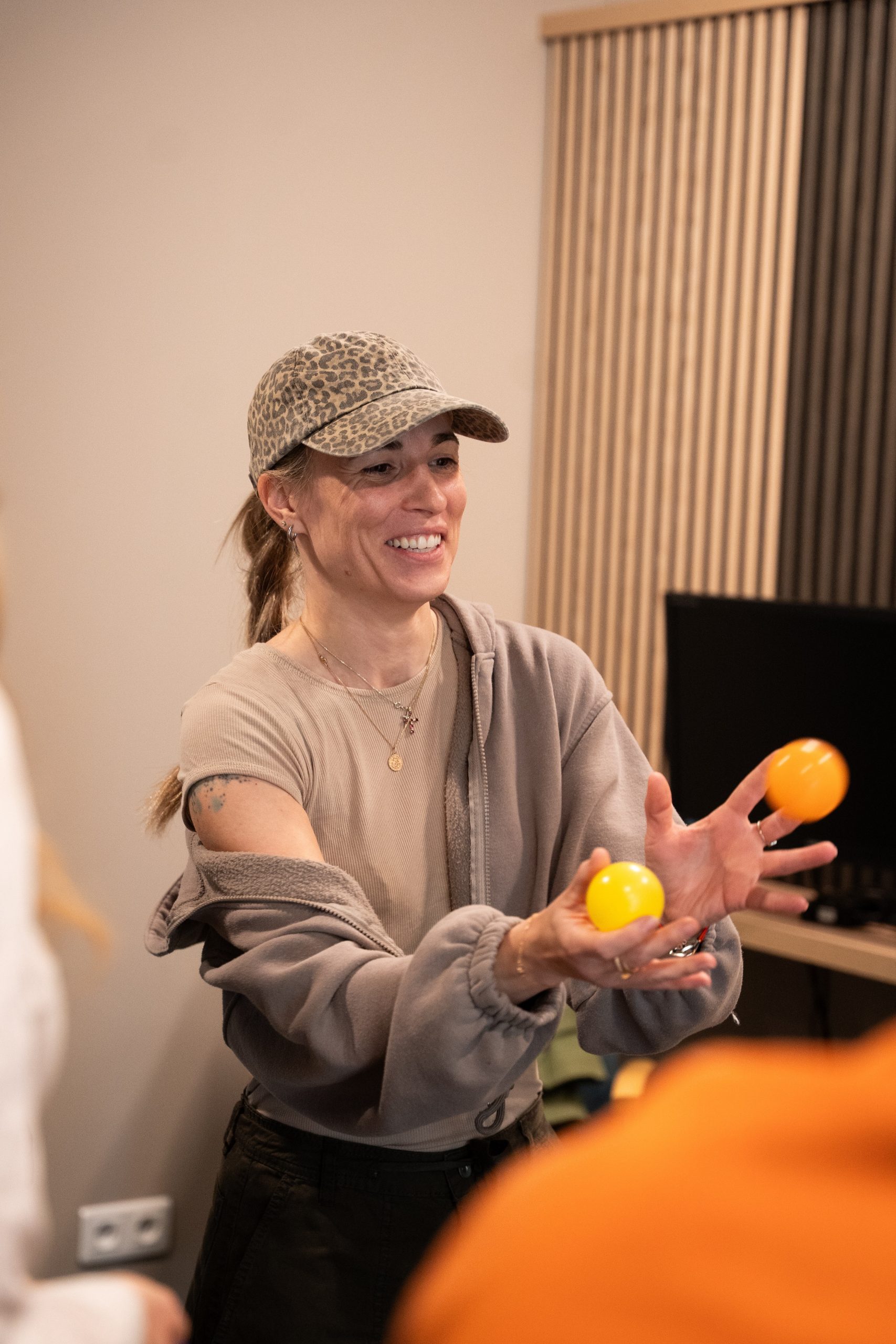
It is called the Ball Point Game and it is standard agile training. A group has two minutes to pass as many balls as it can through every pair of hands in the room. Before each round the team writes down how many it thinks it will manage. After each round it counts how many it actually managed.
Round one goes badly and the guess is far off. This happens every time, with every group.
What happens next is the interesting part. Nobody decides to try harder, because everyone is already going as fast as they can and there is nothing left there. Instead people start changing the arrangement. They stand closer together. They agree on what counts as a dropped ball. Somebody points out that two people have been doing nothing for half the round. The number climbs quickly, and by the last round the guesses are nearly right.
None of this works without counting the balls. Without the count, every round ends with five people holding five different impressions of how it went, all of them honest, and no way to tell a useful change from a confident opinion.
The same problem, without the balls
Growing companies rarely struggle because the people are not good enough or not working hard enough. They struggle because different parts of the company are working from different pictures of what matters.
Sales has made a commitment to a customer. Product has a roadmap built over the last quarter. Delivery wants a few weeks where the plan stays still. Each of those positions is reasonable, which is exactly why talking about it does not fix it. People leave the meeting agreeing, and by the following week each of them remembers a slightly different version of what was agreed, in a way that happens to suit their own work.
So the second half of the session was about writing it down properly. Turning strategy into a small number of priorities that are actually stated. Putting customer requests and internal work on the same list rather than two separate ones, so they can be ranked against each other. Making that list visible to everyone who has to live with it. Everyone worked on their own company rather than on an example, and left with a version they could use the next day.
About the tools
There is a popular line that tools do not fix culture. That is true, and it stops too early. A tool will not create agreement in a team that does not want it. What a tool does is stop a team that already agrees from quietly drifting apart over three months.
A CRM and a task tracker are the count. They do not decide anything. They are simply the one record that both sides of a disagreement can look at, which is what keeps the conversation about priorities instead of about who remembers what. We use YouTrack for ours, and part of the session was spent showing how strategy, priorities and the backlog can sit in one place rather than three.
Without that, you are throwing balls and hoping.